
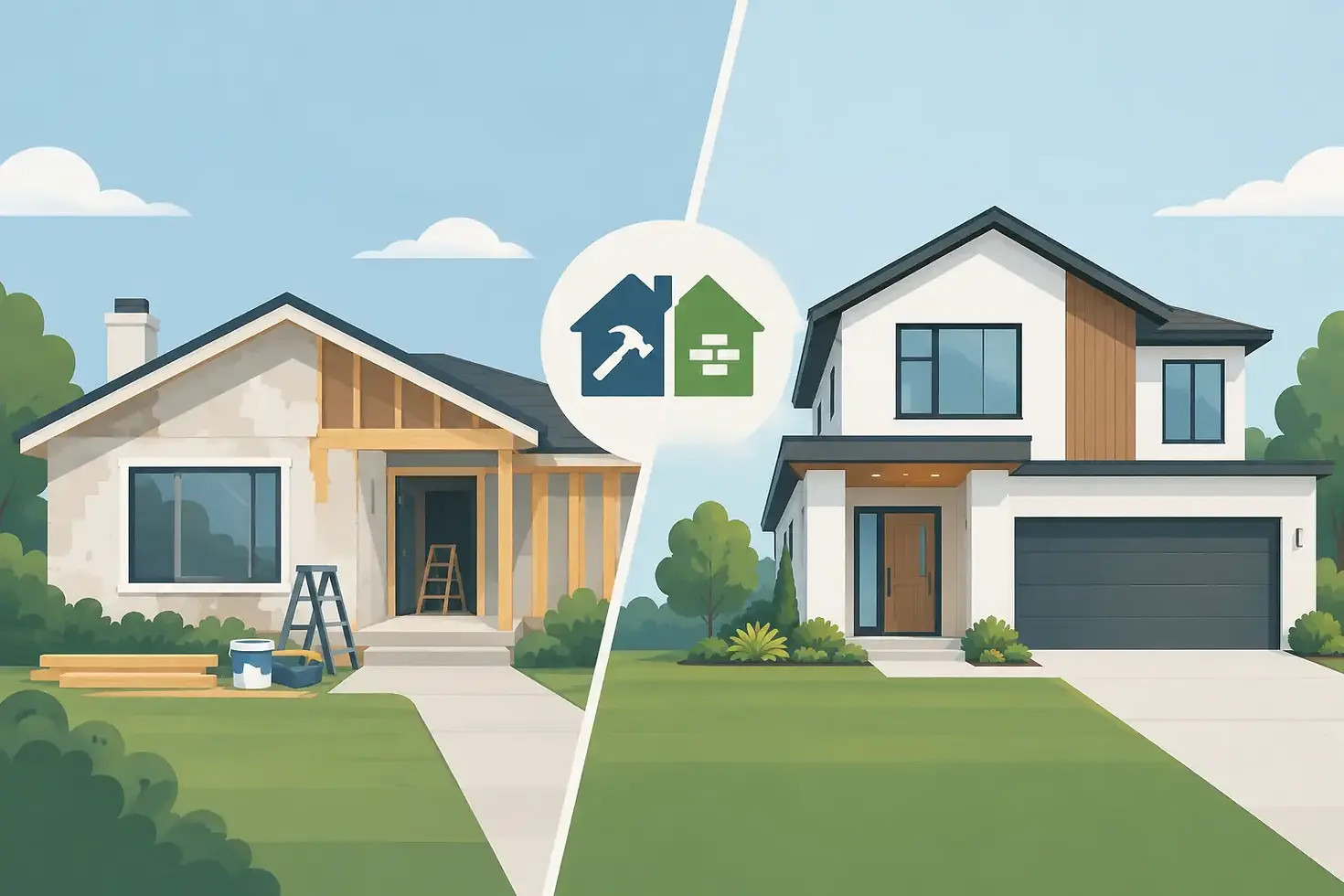
Renovation Versus Rebuild: Which Fits Your Home?

A cramped kitchen, aging bathrooms, and a layout that no longer works can make any homeowner ask the same question: is a renovation enough, or is it time to start over? The renovation versus rebuild decision is not simply about the appearance of your home. It affects your budget, timeline, permit path, living arrangements, and what is realistically possible on your property.
For Greater Vancouver homeowners, the right answer usually comes down to the condition of the existing structure, the changes you want to make, and the long-term role the home will play in your life. A well-planned renovation can transform how a home functions. In other cases, rebuilding provides better value because it removes costly limitations that would remain behind finished walls.
Renovation Versus Rebuild: Start With the Real Problem
A renovation makes sense when the home has good bones and the main concerns are function, flow, finishes, or targeted areas of deterioration. Kitchen remodels, bathroom upgrades, basement improvements, and interior reconfigurations can produce a significant change without replacing the entire structure.
This is particularly true when you like your neighbourhood, your home has a sound foundation and framing, and its footprint already meets your needs. Opening a main floor, adding storage, improving natural light, updating mechanical systems, or building a better family kitchen can make an older home feel entirely different.
A rebuild becomes more compelling when problems are structural, widespread, or difficult to resolve within the existing envelope. Significant foundation concerns, extensive water damage, outdated electrical or plumbing throughout the home, poor ceiling heights, and a layout that cannot be corrected without major compromises can all shift the equation.
The question is not whether an older home can be renovated. Most can. The more useful question is whether the investment will deliver the space, performance, and longevity you expect once the work is complete.
When Renovating Is the Better Investment
Renovation is often the right choice when you want to preserve what already works. Established homes can have advantages that are hard to recreate, including mature landscaping, character details, a familiar floor plan, and a location that suits your family.
A focused renovation also lets you direct your budget toward the rooms that shape daily life. A kitchen can be redesigned around better storage, durable materials, and improved circulation. A bathroom can be rebuilt to address waterproofing, ventilation, accessibility, and comfort. A basement can become useful living space rather than an underused storage area.
There are practical benefits as well. Retaining most of the existing structure may reduce demolition and construction scope compared with a new build. In some cases, the approval process can be more straightforward, particularly when the proposed work stays within the existing building footprint. That said, major renovations still require careful permit planning, especially where structural changes, plumbing, electrical work, or changes to exterior walls are involved.
Renovation also works well for homeowners who want a phased approach. You may complete the main floor now, renovate bathrooms later, and address a basement or addition when the timing is right. The key is to begin with a whole-home plan so early decisions do not limit later work.
The limits of a major renovation
A renovation can reveal hidden conditions once walls and floors are opened. Older homes may conceal water damage, insulation gaps, non-compliant wiring, aging plumbing, or framing that needs upgrading before new finishes can be installed. These are not reasons to avoid renovating, but they should be anticipated in the scope and budget.
There is also a point where preserving an existing house becomes more expensive than replacing it. If every room requires work, mechanical systems need full replacement, and the floor plan still cannot meet your needs, a renovation may become a series of expensive workarounds.
When Rebuilding Makes More Sense
Rebuilding is generally suited to homeowners who need a fundamentally different home, not just a better version of the existing one. It provides the greatest freedom to rethink layout, ceiling height, energy performance, storage, accessibility, and the relationship between indoor and outdoor spaces.
Starting fresh can make it easier to create the number of bedrooms, bathrooms, workspaces, and living areas your household needs. It can also allow for modern insulation, windows, heating and ventilation systems, and electrical capacity to be incorporated from the beginning rather than fitted around an older structure.
For homes with serious structural issues or a very inefficient layout, a rebuild can be more predictable than an extensive renovation. You are not trying to marry new construction to unknown conditions in every room. However, predictable does not mean simple. Rebuilding involves demolition, design, site servicing, municipal approvals, construction requirements, and a longer period before move-in.
In Greater Vancouver, zoning, setbacks, lot coverage, height restrictions, tree requirements, and neighbourhood-specific regulations can all affect what can be built. A home that exists today may not be eligible to be rebuilt to the same size or configuration. This is why feasibility work should happen before a homeowner assumes that a rebuild will automatically deliver more space.
Rebuild costs go beyond the house itself
The budget for a rebuild must account for more than construction. Demolition, site preparation, engineering, permits, utility work, temporary accommodation, landscaping, and contingency planning all matter. The final result may offer a longer-term solution, but the upfront commitment is substantial.
A rebuild may also change property taxes, insurance requirements, and the timeline for returning home. Families should consider whether they can comfortably relocate for the duration of the project and whether the new home will meet their needs long enough to justify the investment.
Compare the Two Options Before Looking at Finishes
It is easy to compare renovation and rebuild costs by looking at a broad price per square foot. That rarely tells the full story. The better comparison starts with your desired outcome.
Ask what must change for the home to work properly. Is the problem a closed-off kitchen, limited storage, and worn finishes? Or do you need an additional storey, a completely different circulation pattern, and major upgrades to every system? The answer shapes the appropriate scope.
Next, assess the existing home professionally. Foundation condition, framing, drainage, roofing, insulation, electrical capacity, plumbing, heating, and prior renovations all influence what a renovation will require. A thoughtful assessment reduces surprises and helps distinguish a manageable upgrade from a house-wide reconstruction project.
Then compare the full project picture: design, permits, construction, contingency, temporary housing, and the value of the completed home. A lower initial renovation budget is not always the better financial decision if it leaves major limitations unresolved. At the same time, rebuilding is not automatically better simply because it is new. If a renovation achieves your goals with less disruption and less unnecessary work, it may be the more sensible choice.
Permits, Planning, and a Single Point of Contact
Whether you renovate or rebuild, early planning protects the project. Structural work, additions, changes to plumbing or electrical systems, and many layout modifications can require permits. Condos and townhouses may also require strata approvals before work begins, with rules around hours, elevator bookings, insurance, and building protection.
This is where an integrated design-build approach provides real value. Instead of asking homeowners to coordinate a designer, permit consultant, trades, and contractor separately, the project can be planned as one connected process. Design decisions are informed by construction realities, selections can be made with the budget in view, and permit requirements can be addressed before the work reaches site.
At Lit Renovations, that coordinated approach includes design support, 3D previews, permitting, trade coordination, transparent pricing, and regular project updates. For homeowners, the goal is straightforward: fewer handoffs, clearer decisions, and a better-managed path from concept to completion.
Choose for the Home You Want to Live In
There is no universal winner in renovation versus rebuild. Renovate when the structure is worth keeping and thoughtful changes can deliver the comfort, function, and value you need. Rebuild when the existing home imposes limitations that would remain even after major investment.
Before committing to either path, define how you want to live in the home five, ten, and fifteen years from now. A clear plan, a realistic assessment of the house, and experienced guidance at the beginning can turn a difficult choice into a confident next step.


Comments